5 Tactics To Improve Employee Relation
Employee relation refers to a company's attempts to build and maintain a favorable connection with its personnel. However, unless workers believe that management is being transparent to some extent, employee relation policies will not be effective.
This function is managed by human resources, which develops and administers policies governing employees’ engagements with their employers and coworkers. The transformation of the workplace has brought employee relations to the forefront in a major way. How workers and employers regard one another is a significant determinant of corporate success. As we know, greater rewards are produced through strong relationships at work.
If you wish to improve employee relations but don’t know where to begin, then you have come to the right place.
Here are five practical ideas to improve the relationship with your workers.
1. Understand your employees’ needs
In order for people to be happy at work, it is important to understand what they want and need. Leaders and managers may ensure that employees’ requirements are being addressed by using workplace technology, such as an employee app. For instance, Hub Engage (as shown in the photo below), allows you to collect feedback through surveys and messaging.

Better employee comprehension, better company choices, and higher worker satisfaction levels result from enhanced communication. With the aid of well-executed survey feedback, objectives for employee retention, brand loyalty, and profitability can all be met.
Consider beginning each team meeting with a “get-to-know-you” icebreaker. It’s a terrific method to build mutual respect, liking, and trust among your entire team. Use open-ended inquiries, such as “What are your passions?” or “Who motivates you?” Learning the responses to these topics will not only help you inspire your employee experience and access deeper forms of motivation, but it will also foster empathy and understanding among your team members.
It is crucial to remember that not all employees are the same: Different employees will have different demands depending on the levels of consciousness they are operating from.
One of the most important things you can do to enhance positive employee relations at work is to understand the diversity of all of your colleagues. Getting to understand this helps in building creativity, workplace culture awareness, and even mental health.
2. Offer Career Development Opportunities
Employees who have the opportunity to learn and grow through professional development opportunities are often happier and more productive, even when they are earning a minimum wage.
Understanding the career path of their profession can help individuals set specific personal goals and gain the abilities necessary to advance to the next promotion.
As an employer, you should, if possible, modify your employees’ jobs to better utilize their skills. Your staff will gain new abilities as a result, and your business will benefit as well. In turn, this will foster positive working relationships. For example, in a bank set-up, you can allow an employee to experience different tasks or departments, either as a teller or as a customer service personnel. This also helps them understand other functions better.
A mentorship program that integrates junior employees with experienced experts within the organization is another approach to establishing employee networks and making employees feel more fulfilled at work. Mentors enable entry-level employees to establish concrete plans for accomplishing goals to flourish in their professional pathways. They can also offer assistance when their mentees confront a challenge at the workplace.
When it is appropriate, inquire about the skills and experience your staff members desire to gain and modify their responsibilities or job requirements accordingly to assist them in achieving their workplace goals.
To aid employees in achieving their long-term objectives, your company may also offer tuition reimbursement for educational programs relevant to professional development. Employee output will be of higher quality as a result, and the organization will benefit, thus leading to improved employee relations at the workplace.
3. Encourage Open Communication and Transparency
Communicating with staff primarily through notes or emails is not only inefficient but also impersonal. Workers will quickly come to believe that they are not an important part of your organization if all you do is talk to them. Having two-way conversations with employees is crucial since they are some of your most valuable resources.
Using small office phone systems for internal communication with your employees helps to improve employee relations as you get to communicate directly and personally.
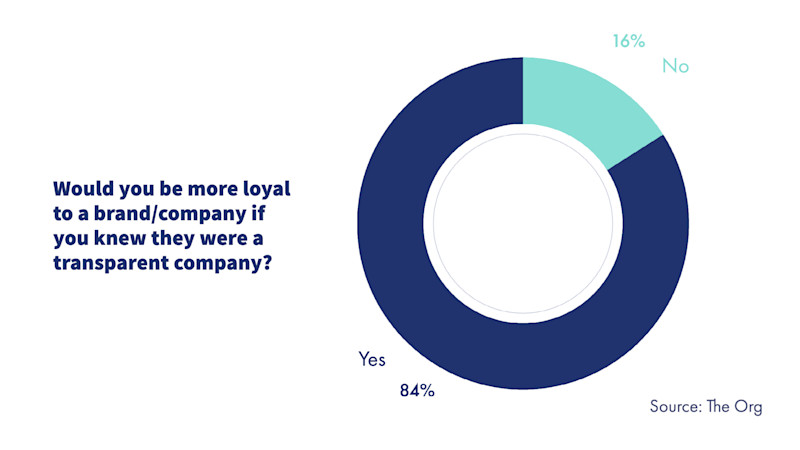
Communication and transparency are important tactics for increasing involvement. Employees simply enjoy being engaged in communication. They feel appreciated as members of the organization, resulting in a more loyal and productive staff. For instance, recent studies show that people are more loyal to companies that are transparent in their dealings, as seen in the image below.

As a business owner, you must speak with your staff to figure out how they can improve themselves. Having a conversation with your staff will not only provide you with insightful information, but will also make them feel appreciated.
When communicating at work, it is essential to use inclusive language, as it does not deliberately or inadvertently exclude people from feeling accepted in any communication. It is critical to encourage stronger employee engagement, superior customer service, and increased productivity, as well as to develop a healthy work culture.
Provide a means, for example, a hotline number, regular anonymous feedback, or surveys where staff members can express grievances and manage disagreements. They require a safe space to express themselves without the fear of reprisal. That doesn’t mean employees should be free to complain to the entire workplace, but there should an open-door policy in place that allows employees to bring up issues.
4. Make Them Feel Special to the Organization
When workers feel appreciated at work, they are happier, more productive, and less likely to look for other employment opportunities. There are many ways to show your appreciation for employees, ranging from recognition programs and financial incentives to simple gestures, such as listening to and acting on employee feedback.
Employers must understand the link between performance and employee happiness at the workplace. When your employees feel valued and see that the company cares about their personal well-being, they will automatically perform better. Your organization will perform at its best as you improve employee relations.
Some ways to improve employee relations and make employees feel special to the organization include:
Rewarding employee performance and making them feel recognized when they perform well.
Have the basic gesture of providing snacks and coffee/tea to energize them as they work.
Offer compressed work time, like introducing a four-day work week or shorter working hours.
Provide wellness and fitness options for your employees.
Give them staff training and retreats.
Every one of your employees is an individual with hopes and dreams, and they are whole beings who need to feel valued. Employees’ value in your organization will increase, and your business will gain significantly if you support them and make them feel like a part of the business.
5. Focus on Work-Life Balance
Work-life balance is critical for many people. Creating a work environment that allows employees to pursue interests beyond the office will result in a stronger workforce and improved employee relations.
Work-life balance can be achieved through a variety of options, including paid time off, working from home, health benefits, and flexible hours.
Work-life balance encompasses more than just workplace policies. Managers that are sympathetic to their workers' outside-of-work issues might boost not just that employee's well-being, but also their general image of the organization. Being understanding when employees need to take time off is another way to improve employee relations.
Recent studies by NCBI on different life domains and their levels of importance helps one understand how an average work-life balance should be. This helps to promote productive and happy employees.

The research claims that when balance is successfully implemented, both at work and at home, people feel more content.
A healthy work-life balance goes a long way in increasing productivity, leading to happier workers, and making your business an ideal place to work in for most employees.
In closing
Healthy employee relationships promote a pleasant work environment, where employees feel content at work. They look forward to coming to work every day and working hard to achieve the goals of their team and the business.
You need to ensure that you follow the correct tactics to build your company’s employee relations. Communicate the mission and vision of the firm. Make employees feel appreciated. Encourage work-life balance. Provide opportunities for career advancement. This way, you will grow your productivity and make employees stay connected with your business.
The task to improve employee relations lies not only with the top leadership of the business but also with every employee. A mutual and unified participation leads to a healthy and happy work environment. By understanding all these tactics, we can improve how we relate to each other despite our ranks at work in order to foster a healthy working environment.



Comments
Post a Comment