Everything You Need to Know about E-commerce Merchandising
Top e-commerce sites today are pushing beyond traditional tactics for personalized product recommendations to offer genuine multichannel user experiences. Traditional retailers in the past were simply focused on bringing offline marketing campaigns and merchandising ideas online.
Online retailers are evaluating data based on user behavior, using machine learning to optimize product rankings, and customizing their websites vis-à-vis the shopping experience level.
E-commerce businesses, like brick-and-mortar stores, must create an environment on their websites that encourages shoppers to remain and order things. Furthermore, before your buyers can touch your things, your visual merchandising needs to be genuine and highly represented.
As an online business owner, you may be asking how merchandising an online store works. We are going to look at everything you need to know about e-commerce merchandising.
What is E-commerce Merchandising
If you shop online, you have made a purchase from an e-commerce retailer, which is an online store that sells merchandise via a website. Online merchandising is all about how the company offers its products to online shoppers.
E-commerce merchandising encompasses a variety of strategies, including branding, product placement, captivating product images, and coming up with creative methods to present goods. The ultimate objective of the store is to get the potential customers to “add to the shopping cart.”
The good news is that improvements in crucial business performance metrics go hand in hand with enhanced consumer experiences. Customers are more likely to buy from you if you make it easy for them to locate the things they want.
E-commerce merchandising may assist you in ensuring that every consumer who visits your site has a consistent experience, regardless of how they arrived at your site or how they browse once there.
Why Does It Matter for Your E-commerce Business
It is crucial now more than ever to spend money on an effective digital merchandising strategy, since we are living in historically unprecedented digital advancement times.
Getting to understand and run your business effectively, especially with commerce advice on how to get business licenses and products for a profitable venture, can be challenging.
Online merchandisers must provide their clients with a distinctive purchasing experience given the fierce competition in today’s e-commerce industry.
Creating successful and distinctive customer experiences may not only enhance conversion rates but also establish a long-term brand image that will lead to consumers returning on a regular basis.
E-commerce merchandising specialists can also assist businesses in meeting their strategic business objectives. Through tailored content, advertisements, and banners, marketing initiatives may be integrated directly into the website. Consider incorporating a strategic collaboration into your marketing material with successful online shopping experiences.
Best Practices for E-commerce Merchandising
Customers can easily find the specific products they’re looking for with an effective merchandising strategy. An e-commerce merchandising specialist should include four key practices to accomplish this:
Conduct a user-generated content analysis
Optimize for mobile viewing.
Use engaging visuals in the content
Provide real-time personalization and recommendation
Let’s look into each of these practices in detail for a clearer understanding of how it improves the search engine.
1. User-Generated Content Analysis
We are now in the era of user-generated content. The days when only professionals (photographers, videographers, designers, etc.) worked on the material we watched or read are long gone. Now, practically everyone has the capacity to record great information, owing to pocket-sized smartphones, making their own content all the time and sharing it with others online.
User-generated content is defined as any type of material—for instance, text, blogs, graphics, product videos, reviews, and so on—created by individuals (not brands) and uploaded on a social network.
You take a weekend getaway and book yourself at a fancy hotel. You share several photos from your stay with your Facebook friends and Instagram followers, giving an elaborate product description, tagging and geo tagging the hotel to demonstrate what a fantastic location it is. These pictures in the posts are user-generated content.
Let’s imagine that this specific hotel discovers your material on social media and contacts you to ask whether they may promote your images on their business channels.
That is a brand utilizing user-generated content as a component of their marketing goals.
User-generated content is utilized to influence customer engagement and enhance conversions at all phases of the buyer’s journey. Customer-focused content may be implemented on social networking platforms as well as other platforms, including email, landing sites, and checkout pages.
Nowadays, marketing messages must compete for consumer attention by fighting to be visible online. As a result, bestselling products are more picked based on the companies and how they engage to make purchases.
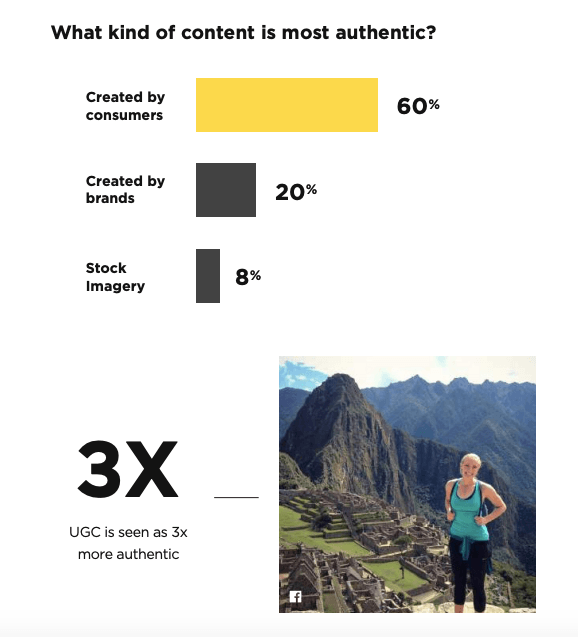
E-commerce merchandising specialists spend a lot of time and money developing the precise messages and professional graphics that they believe customers want to see. But customers don’t demand perfection on product display; they want authenticity.
When questioned, 90% of customers think authenticity is vital when picking which businesses to like and support, and 60% say user-generated content is the most authentic kind of material. You can see the stats displayed below.

User-generated content must be viewed as the contemporary equivalent of word of mouth, since people eventually believe what they hear from other people.
Instead of being a spectator, user-generated content allows customers to actively participate in the creation of a business. This has a significant impact on brand loyalty and affinity, since individuals thrive on being a part of something bigger than themselves, and providing user content allows them to be a loyal customer base to a brand.
2. Optimize for Mobile Viewing
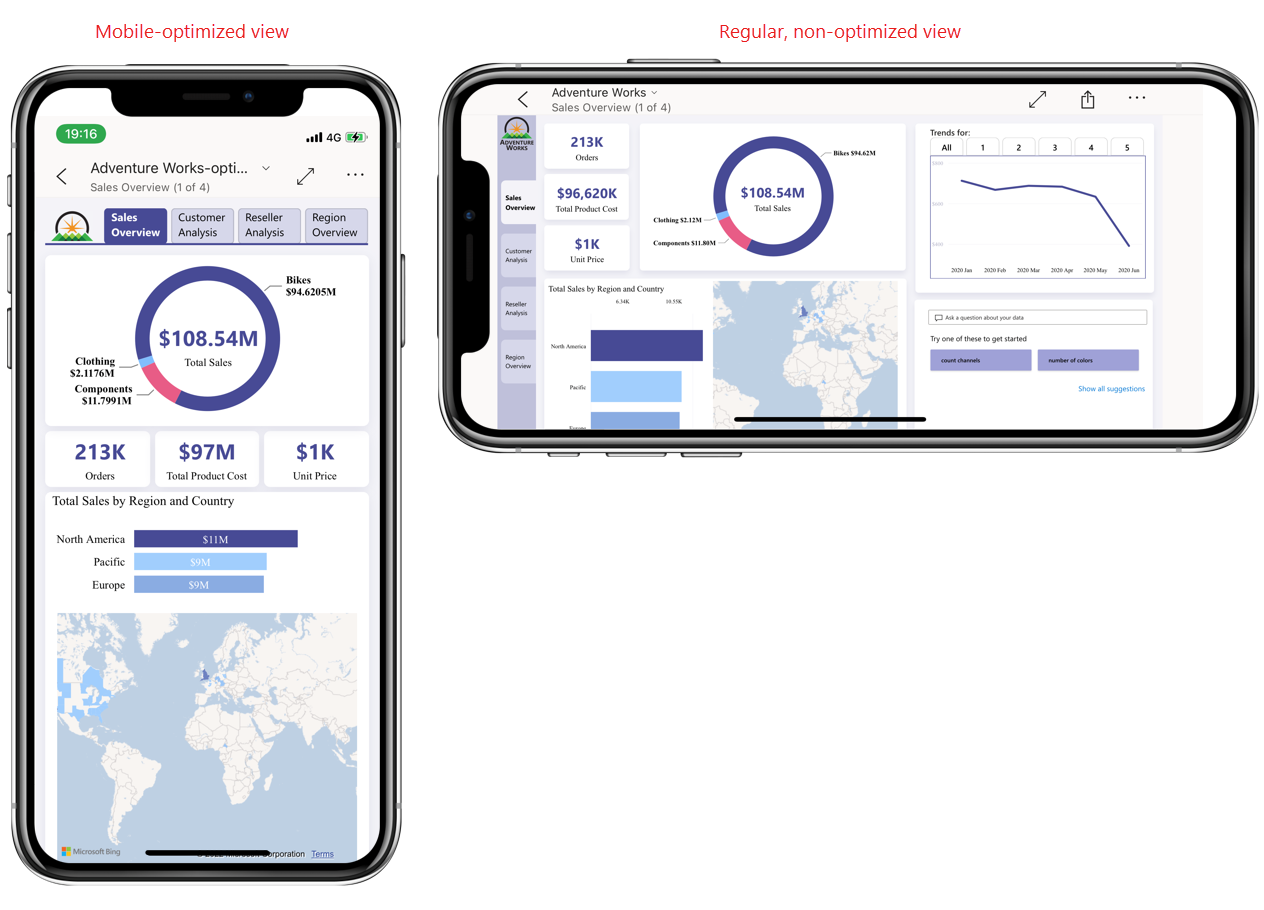
A mobile-optimized e-commerce store reformats its website to fit mobile screens. It not only ensures that the store displays properly on smaller screens, but it also makes the store much easier to navigate. It reformats material, shows bigger navigation buttons, searches queries, and optimizes graphics to fit the size of the screen. For instance, check the image shown below.

People are increasingly adopting mobile phones, such as smartphones and tablets, to access the internet. In fact, not having a mobile-optimized website might harm your marketing efforts.
When you optimize your e-commerce retail store to meet mobile specifications, then your online store should load rapidly. Online merchandising strategies that aren’t properly optimized for mobile can take a while to load, especially when they utilize Flash components.
A mobile-optimized e-commerce store increases the likelihood of your customers engaging with you. This is because consumers will spend more time browsing individual products in your store. They will also be able to connect with your site, whether by liking the content, clicking on CTAs, or even leaving comments.
When you give mobile consumers a pleasant user experience, they will spend more time in your retail store. The longer people stay on your site, the more probable it is that they will convert or return later.
You need to improve your mobile SEO, using local SEO, to actually have a higher search probability on Google.
Given how many people use mobile devices to do searches and browse the web, the value of a mobile-friendly website cannot be emphasized. Optimizing your mobile allows you as an e-commerce, merchandising specialist to grow your audience and grow your search optimization.
3. Use Engaging Visuals in the Content
Visual engagement entails connecting visually with customers through screen sharing, CoBrowsing, or face-to-face video conferencing. This type of interaction is especially useful when a consumer wants assistance to resolve a software issue or has a query regarding a transaction.
These visual engagements are a simple, effective, and cost-effective approach to rapidly and effectively convey your message while differentiating your brand. And by visuals, they include images, movies, photographs, graphs, infographics, charts, memes, GIFs, and pretty much any other type of non-textual material used by an e-commerce merchandising specialist.
As internet businesses compete for our dwindling attention spans, visual engagement has become increasingly vital. According to Microsoft research, a typical person’s attention span is about eight seconds.
However, the following are numerous advantages of visuals in content for an optimal shopping experience.
Visual content attracts followers.
The content keeps followers interested.
It’s simple to understand visual content.
It’s easy to remember visual content.
Visual content is relatable.
Visual content is extremely shareable.
If you want to tap into your audience’s visceral psyche, provide exciting ways for them to explore and leave them speechless. Visual content can accomplish this, but you must keep in mind that only a well-designed visual content marketing strategy will suffice.
4. Provide Real-Time Personalization and Recommendation
The term “e-commerce personalization” refers to the process by which an online store displays dynamic content based on customer data. These data include demographics, intent, preferences, browsing history, previous purchases, and device usage, for example, whether the customer is shopping on a mobile, tablet, or even a smartwatch.
E-commerce product recommendations are exactly what they sound like: things that are suggested to clients of a company based on what the brand believes the customers would enjoy and wish to buy.
By providing real-time personalization and recommendations, the e-commerce merchandising specialist enhances business with the customers and improves customer relation and loyalty.
In a physical store, recommendations are usually provided by knowledgeable sales associates. A store clerk, for example, may tell you what’s been selling well or propose an item based on the goods you’re holding in your hands, but it doesn’t exactly match your needs.
However, suggestions in an e-commerce business are based on algorithmic conclusions and data. Getting effective ways to properly do sales analysis in order to properly manage your business.
Online product suggestions can be general or customized and can be offered via a range of platforms and channels, including on-site, via email, or even social media applications.
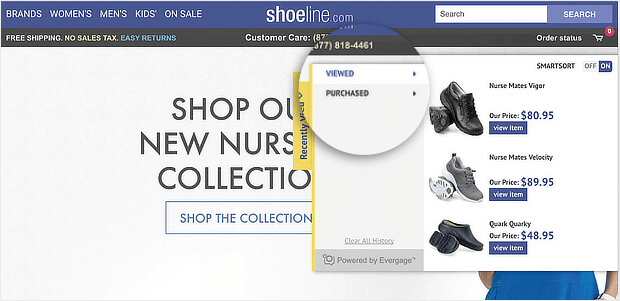
Let’s take a look at a real-life example. Shoeline, an ecommerce shoe business, takes product customization to the next level. When you log in to your account, you’ll see not just the things you’ve previously browsed, but also the ones you’ve purchased.
While most e-commerce systems provide this information, Shoeline makes it much easier to view as shown below:

The customer has two tabs, as you can see:
Viewed
Purchased
This allows Shoeline’s current customers to discover new goods or purchase things that are already in their shopping basket.
In any case, this e-commerce personalization strategy increases sales.
In Closing
Digital e-commerce merchandising grows by the day, and you should embrace user generated content to grow your business and show authenticity.
When it comes to online merchandising, e-commerce stores have a few drawbacks when compared to traditional brick and mortar stores. There is rarely anything that can't be overcome with technology and a little imagination. Optimizing the ecommerce sites to mobile viewing increases your access and makes your business more ideal to everyday mobile users.
Catch the attention of your buyers with visual engagements, providing content that attracts and retains your followers. The real time personalization and recommendation attracts the right clients and increases your sales revenue.
Having known and understood all these practices and their advantages, you can implement them in your ecommerce store to help you grow. Enhance your ecommerce merchandising to put your online store ahead of the competition.


Comments
Post a Comment